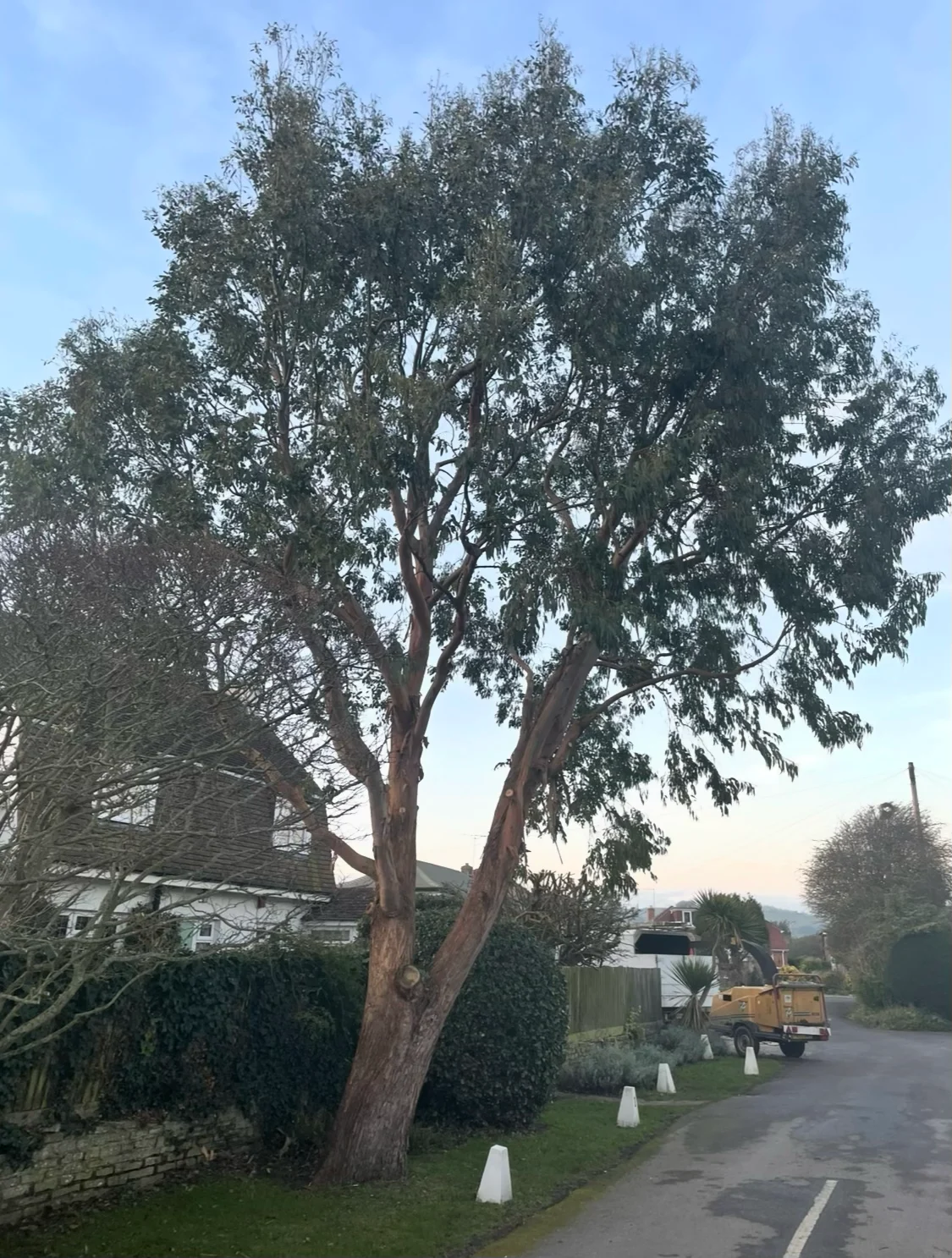
Crown Thinning & Crown Lifting
Selective branch removal to let more light and air through a crown, or raising the lower canopy to give clearance underneath.
Two different jobs, often confused
Crown thinning takes out a proportion of the smaller, inner branches throughout the crown. The tree keeps its size and outline; the crown just becomes less dense, so more light and wind pass through it.
Crown lifting removes the lowest branches to raise the canopy, clearance over a path, a drive, a lawn or a road.
They are often quoted together because people ask for "more light" and the right answer is usually a bit of both, weighted towards lifting.
An honest word about light
Thinning lets less extra light into a garden than most people expect. Foliage regrows within a season or two, and a heavily thinned crown quickly puts the density back.
If the real problem is a dark patio or a dark room, lifting the crown usually does more than thinning it, and a reduction on the side facing the house does more than either. We would rather tell you that on the quote than take your money for the wrong operation.
How much can come off
Working to BS3998:
- No more than about 30% of the live crown density removed in one thinning operation. Beyond that you are stripping the tree, not thinning it.
- Crown lifting to no more than a third of total tree height. Lifting higher leaves a lollipop and shifts weight to the crown top.
- We do not lion-tail, stripping the inner growth and leaving foliage only at the branch ends. It looks like thinning and it is not: it loads the tips and makes limb failure more likely.
- Deadwood over about 25mm is taken out at the same time, on safety grounds.
Timing and wildlife
Most broadleaves can be thinned through the dormant season, late autumn to early spring. Birch, maple, walnut and hornbeam bleed if cut in late winter, so they are better in late summer. Plum and cherry only between June and August, to avoid silver leaf.
The bird nesting season runs 1 March to 31 August and active nests are protected under the Wildlife and Countryside Act 1981. We check before we start.
Permissions
A TPO or a conservation area means council consent before any thinning or lifting, exactly as for a reduction. We handle the application.
How we quote
Free and on site. Thinning is priced on crown size and access. It is a job worth seeing in person: the same species at the same height can be very different work depending on what sits underneath it.
Common questions
What's the difference between thinning and lifting?
Thinning removes a proportion of the inner branches so the crown is less dense but the same size. Lifting removes the lowest branches to raise the canopy and give clearance underneath. Most 'more light' jobs want lifting more than thinning.
How much can be thinned in one go?
BS3998 puts the sensible limit at around 30% of live crown density. More than that stresses the tree and tends to produce a flush of regrowth that closes the crown back up within a couple of seasons.
Will thinning really let more light into my garden?
Less than people expect, and not for long. Crown lifting, or a reduction on the side facing the house, usually does more. We will say which we think will actually solve your problem.
Will thinning make the tree safer in high winds?
A properly thinned crown lets wind pass through rather than acting as a sail, which can help. Badly done thinning makes wind loading worse. Lion-tailing is the usual culprit.
How high can you lift the crown?
Up to about a third of the tree's total height. Beyond that the tree looks wrong and the weight distribution suffers. For a standard garden tree that is usually enough to walk or park underneath.