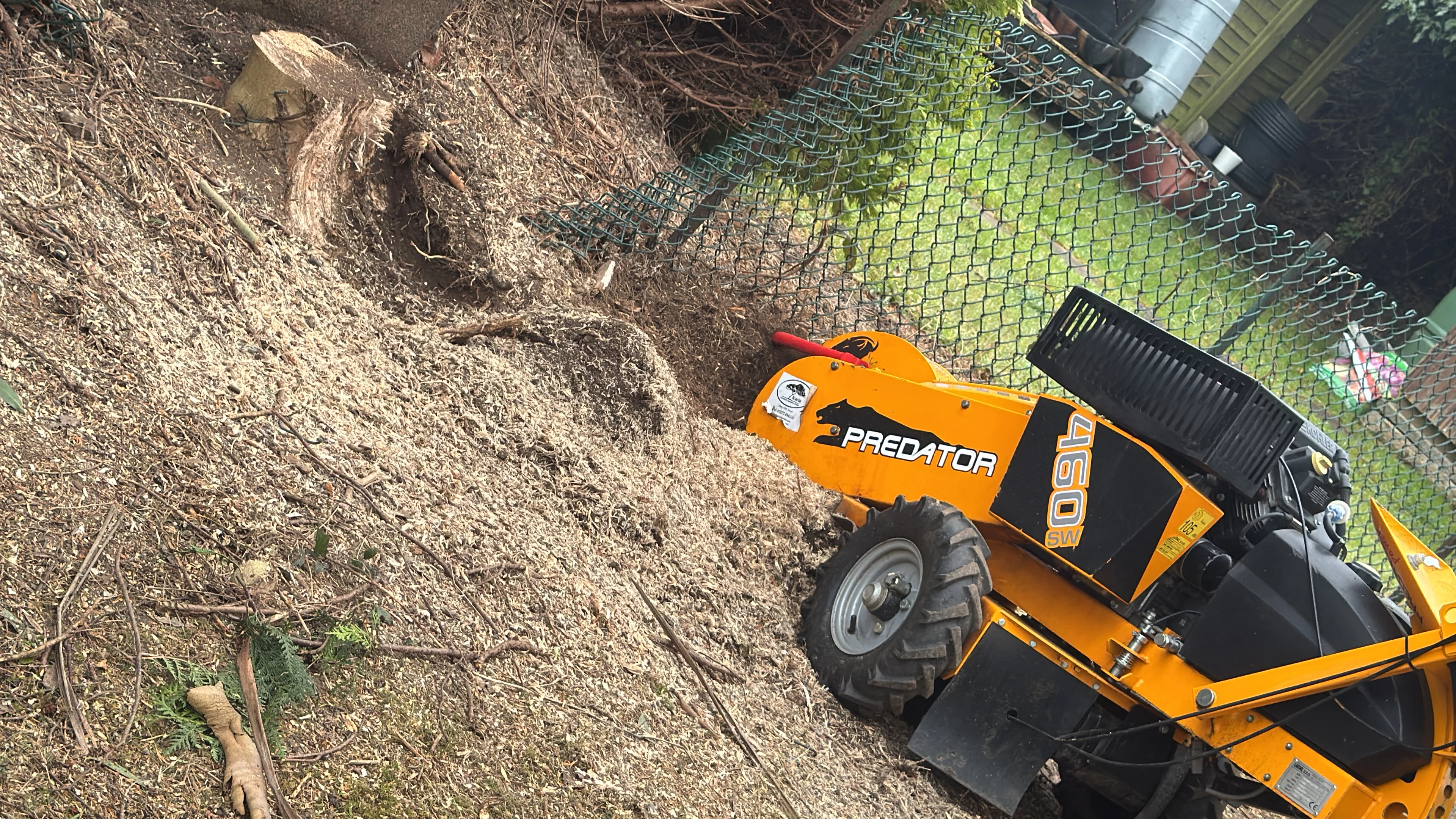
Stump Grinding & Removal
Grinding stumps out below ground level with a purpose-built machine, leaving ground you can turf, plant or pave over.
What grinding actually does
A grinder cuts the stump and the main root plate away in chips, working below soil level. It does not pull the whole root system out; nothing short of an excavator does, but it takes out enough that the ground can be reused.
How deep
Normally 200-300mm below soil level, which is enough for turf, planting most things, or paving over. If you are putting in a new tree in exactly the same spot, or laying foundations, say so and we will go deeper.
What you are left with
A hole, and a surprisingly large pile of chip and soil. Stump grindings expand a lot, the volume looks wrong compared to the stump that produced it.
You have two choices, and it is worth deciding before we quote:
- Backfill with the grindings and top with soil. Cheapest, and fine for turf later. The ground will settle over a few months and want topping up.
- Take the grindings away and backfill with topsoil. Better if you want to plant straight away, fresh grindings tie up nitrogen as they break down and young plants struggle in them.
Access is everything
The machine needs to get to the stump. Ours needs a reasonable gate width and a route without steps; narrow side returns and enclosed back gardens are the usual problem. Tell us on the phone what the access is like and we will tell you honestly whether it is viable.
Do the roots keep growing?
The stump itself will not regrow once ground out. Some species, poplar, willow, cherry, lilac, sumach, send up suckers from the remaining root system for a season or two afterwards. Mowing them off deals with it; they run out of energy without foliage.
Near walls, drains and services
We can grind close to a wall, but not tight against it: the cutting wheel needs clearance and there is usually some root left behind in that last few inches. We check for utilities before starting. If there are known drains or cables through the area, tell us, a grinder does not distinguish.
Cheaper with the felling
If you are having a tree felled, having the stump ground on the same visit is noticeably cheaper than a separate trip, because the crew and the machinery are already there. It is worth deciding at the quote stage rather than calling us back.
How we quote
Free and on site. Price depends on stump diameter, how many, and access. Diameter matters more than height, a wide stump is much more grinding than a tall one.
Common questions
How deep do you grind?
Normally 200 to 300mm below soil level, which is enough to turf, plant most things or pave over. Tell us if you are replanting a tree in the same spot or laying foundations and we will go deeper.
Can I plant, turf or pave over it afterwards?
Yes to all three. If you are planting straight away it is better to take the grindings off site and backfill with topsoil, fresh grindings tie up nitrogen as they rot and young plants struggle.
What happens to the grindings?
Either backfilled into the hole and topped with soil, which is cheapest and fine for turf, or taken away. Decide before we quote, the volume is a lot more than people expect.
How much access does the machine need?
A reasonable gate width and a route without steps. Enclosed rear gardens and narrow side returns are the common obstacle. Describe the access when you call and we will tell you straight whether it can be done.
Will the roots keep growing or re-sprout?
The ground-out stump will not. Some species, poplar, willow, cherry, lilac, throw suckers from the remaining roots for a season or two. Mowing them off exhausts them.
Is it cheaper done at the same time as the felling?
Yes, noticeably. The crew and the machine are already on site, so you are not paying for a second visit. Worth deciding at the quote stage.